What is killing the people of Punjab silently? Something more sinister than heroin. Did you say vanaspati?
Urgent intervention is required at the ground and policy levels to shift the narrative from Udta Punjab to hypertense Punjab.

The viral video of a young girl snorting drugs in a police station shocked the country. (Source: YouTube screenshot)
Think Punjab, and this is the first image that comes to mind. The grab is from a video that went viral and shocked the nation last year. A newly married woman is seen snorting ‘chitta’ (synthetic drugs) sitting allegedly inside a police station.
The narrative of Punjab’s drug menace took a new turn implying that the drug abuse was not limited to the restricted to the typical demographic of unemployed rural youth in the state, but was rampant among the urban rich brats, spoilt college girls, bored housewives and even cops.
According to the Punjab Opioid Dependence Survey 2015, conducted by the Ministry of Social Justice & Empowerment, and AIIMS, the estimated size of the opioid-dependent population in Punjab is 2,32,856 — translating to 837 opioid-dependents per 100,000 people in the state. Or 0.84% of the state’s 28-million population.
While drug abuse cannot be undermined in any way, there is another shocking health concern in the state that is not being addressed with the fervour and urgency that it demands.
A whopping 40 per cent of the state’s adult population — suffer from the cause of the world’s leading killer (more than all infectious diseases combined). The silent killer has the maximum number of victims in India as compared to any other country in the world, and among the Indian states, Punjab leads. The silent killer is hypertension.
In the recently held media dialogue with health experts, policymakers and journalists in Chandigarh on ‘Hypertension Management and Trans Fat Elimination in Punjab’, the experts pointed out that the state is a high-burden region for cardiovascular diseases.
With 2 in every 5 adults in the state’s population at risk of heart disease and stroke in the state, it came as another jolt that the trans-fat consumption is the highest in Punjab. The next time, you are enjoying a parantha in Punjab dripping in the vanaspati, remember that the intake of trans-fatty acids can increase the risk of death due to a heart attack by 28 per cent.
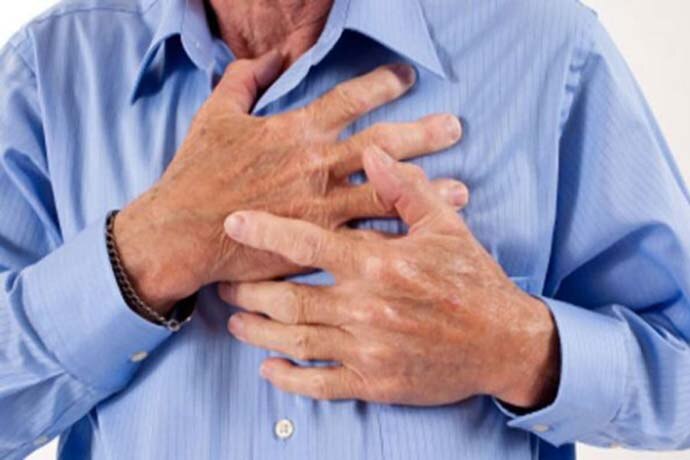 With 40 per cent of the adult population at risk of an impending heart attack in the state, it is time the government intervened. (Representational image: Reuters)
In hindsight, this should have been foreseen considering that Punjab is the largest producer — and the largest consumer of vanaspati. According to 2007-2008 estimates, a population of 2.67 crores (then) consumed 19,633 million tonnes of vanaspati per month. Compare this with Jharkhand. The population then was 3.01 crore and the consumption of trans-fats was 1,912 million tonnes a month.
Vanaspati is a type of thick vegetable oil that is full of trans-fats. WHO estimates that every year, trans-fat intake leads to over 5,00,000 deaths worldwide from cardiovascular diseases.
“Drugs are glamorous, that’s why everyone talks about it. But hypertension and cardiovascular issues are a bigger problem for Punjab — and no one is paying any attention to it,” Dr Subhojit Dey, a non-communicable diseases expert reportedly said during the media dialogue. The experts urged the Punjab government to take immediate steps to limit its consumption by regulating trans fat in oils and foods through stringent policy enforcement. The immediate steps involve motivating the people of Punjab to make dietary changes by reducing industrially-produced trans fats. The limitation must also be extended to foods containing partially hydrogenated vegetable oils (PHVOs) — as detrimental as the trans-fats.
Lives are being needlessly lost and lost to a cause that is completely preventable by a small change in lifestyle.
If the lifestyle changes are not voluntarily brought by the people, government intervention in the form of limiting the availability of the fatty toxin, and eventually eliminating it from the food supply, is imperative for the health of the present and future generations.
Drug abuse is only a small — though highly glamorised killer. That tin of vanaspati in the kitchen is more sinister.


Comments
Post a Comment