Rivers of poison overflowing with drugs
The rivers of the world are coursing with unhealthy levels of antibiotics, over-the-counter and prescription drugs waste, a top-level UK study has revealed.
In the study, researchers analysed samples from 711 sites across rivers in 72 countries for 14 commonly used antibiotics and found that 65% of them were contaminated with antibiotics — some up to 300 times the “safe” levels. This worst-case scenario was found at a site on the river Brahmaputra in Bangladesh where concentrations of the drug Metronidazole — an antibiotic used to treat bacterial infections including skin and mouth infections. The samples included some of the world's best-known rivers — including the Brahmaputra, Chao Phraya, Danube, Mekong, Seine, Thames, Tiber and Tigris.
According to the reports, dangerous levels of contamination were most frequently found in Asia and Africa. However, while the sites in Bangladesh, Kenya, Ghana, Pakistan and Nigeria were found to be exceeding safe levels by the greatest degree, Europe, North America and South America also had levels of concern — establishing that antibiotic contamination is a global problem. The Thames was reportedly contaminated with five antibiotics, including levels of ciprofloxacin — a drug used to treat skin and urinary tract infections — that were three times what is considered safe.
The study was conducted by environmental chemist Alistair Boxall of the University of York in England, her colleague John Wilkinson. “I don’t think I was expecting the degree of concentrations that we saw. That was quite eye-opening,” Boxall reportedly said.
The two presented their results in Helsinki at a meeting of the Society of Environmental Toxicology and Chemistry recently.
Drug pollution
While other forms of pollution have been widely documented, drug pollution is barely spoken about. With the pharmaceutical drugs and their metabolites reaching the aquatic environment, there is a certain threat of the contaminated water entering drinking supplies and the food chain. Moreover, it is one of the main ways that bacteria in the environment can build up resistance to life-saving medicines, rendering them useless.
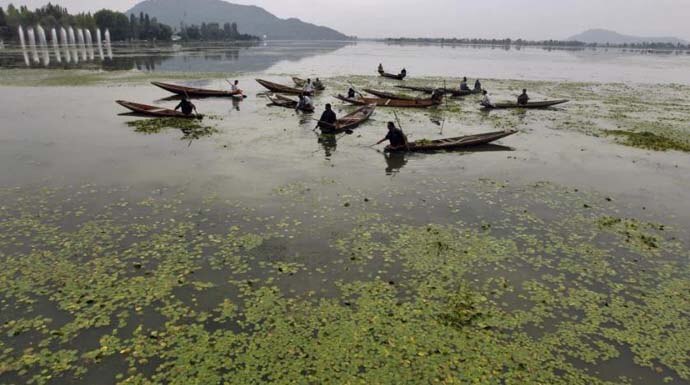 The flow of poison: Rivers around the world are contaminated with antibiotics. (Photo: Reuters)
The research comes along the lines of another report by the United Nations Interagency Coordination Group on Antimicrobial Resistance, that was released in April 2019. That report said that drug-resistant diseases are causing at least 7,00,000 deaths a year globally. This includes 2,30,000 deaths from multidrug-resistant tuberculosis. It went on to estimate that without concerted global action, up to 10 million people a year may die from drug-resistant diseases by 2030. Following this, the UN had called resistance to antibiotics, antivirals, antifungals and antiprotozoals a "global crisis."
The Indian angle
Closer home, a study published by the Indian Council of Medical Research (ICMR) found antibiotic-resistant organisms in the digestive tracts of two out of every three healthy persons who were tested — pointing to a rapid spread of antibiotic resistance in the Indian population. The study was based on analysis of stool samples of 207 individuals who had not taken any antibiotics for at least a month and did not suffer from any chronic illness. Saying that the results were a cause of concern, Dr S K Sarin, director of the Institute of Liver and Biliary Sciences (ILBS), pointed out that the presence of antibiotic resistance in healthy persons threatens the medical science’s ability to treat common infections in the future.
Is there a solution?
"Solving the antibiotic problem in the rivers is going to be a mammoth challenge," Boxall says. “To counter the problem, it will be necessary to invest in infrastructure for waste and wastewater treatment, tighten regulations and clean up already contaminated sites,” he explains. However, what is important is the restriction and regulation of medical waste disposal. The proper implementation of BioMedical Waste Management Rules 2016 is considered a major problem in waste disposal in the country.
The situation demands immediate attention with antibiotic resistance swiftly building and rapidly spreading.
Also read: World Environment Day: Why the life-breath that is choking us matters


Comments
Post a Comment