International Tiger Day: Tigers move out of their territory when we encroach their habitat
There are 3890 wild tigers in the world, approximately 2226 are in India itself amounting to about 70 per cent of all wild tigers in the world, although the tiger population is thriving in India, our obstruction to their dispersal accentuates the man-animal conflict.
These cats especially tigers need their well-defined territories. Tigers require more area than tigresses and it is seen that tigresses share their territories with tigers but no two tigers share the same territories.
 Tiger's behaviour is to run away from where humans reside. (Photo: ANI)
The territory of a tiger mainly depends upon prey base, geographic area, water source and sex of the cat. Natural behaviour of a cat may it be a stray cat or a big cat like a tiger or a leopard is to run away from the presence of human beings. Big cats are shy animals which do not like to come near humans but unfortunately due to safaris and tourism the behaviour which is portrayed by the tigers is not their natural instinctive behaviour.
Wildlife spillover and migration is a common phenomenon in animal kingdom and is seen with tigers as well. Tigers sometime tend to migrate from their territories for finding water source, mating, to find new territory, finding better prey base and a dominant tiger pushing it's away.
When in the existing territory of a tiger, there is not enough water it tends to migrate out. There have been incidences when tigers or leopards have even entered in the city limits in search of water and the smell of water which attracts them.
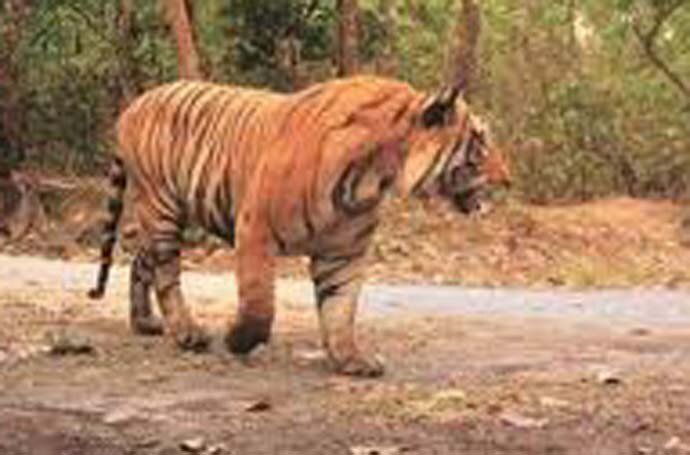 Tigers often venture out of their habitat in search of water. (Photo: Aaj Tak)
Tigers also migrate in search of their mates. In this process, they travel to different geographic areas which safeguard gene distribution and avoids inbreeding of the cats. It is important for the tigers to migrate and mate, this keeps their gene pool distributed and strong, otherwise inbreeding can become hazardous for their survival.
Tigers also leave their territories in search of a new prey base, when there is a lack of prey in their own territories. When new cubs are born, these new tigers need their own territory to live and to do so they require new areas. Young tigers find new areas to dominate and sometimes fight with the resident tigers to gain their habitat and territory. The tigers who have lost their territories have to migrate to find new ones.
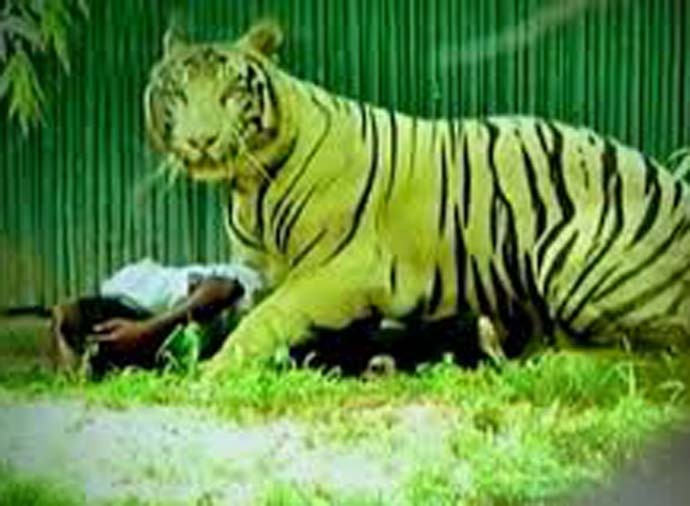 Building of new roads and highways takes up tiger's land, humans simply don't care. (Photo: Aaj Tak)
When these tigers are migrating and trying to find new territories to settle down, human encroachment becomes a hindrance. Fragmentation of the tiger migratory corridors by constructing new highways, railways, farming grounds, mines, industries etc, leads to increased man-animal conflict and tigers become victims to illegal poaching and unnatural deaths.
According to National Tiger Conservation Authority in 2019 we have lost 63 tigers and 218 leopards already. This is an alarming rate at which we are losing wild cats. Recently we have lost three tigers, a mother and two young cubs due to poisoning by a local villager in Bhramapuri, Maharashtra.
While crossing the highways, which cut right through their migration corridors, tigers often become victims of road traffic accidents. Recently an alpha male of Bor National park “Bajirao” died due to a road traffic accident on a national highway Nagpur (MH).
Tigers also fall prey to electrocution. Farmers electrify the fences on their farms with electric wires. They steal electricity from the high tension poles and there is uncontrolled electricity that flows through these wires. Not only tigers but elephants and other herbivores too lose their lives due to these electric fences. The herbivores which are electrocuted are underreported and are used as bushmeat.
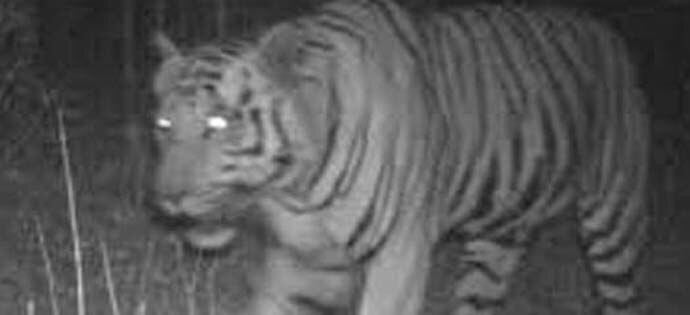 When tigers step out of their habitat they often get electrocuted. (Photo: India Today)
Famous tigers who have lost their lives due to electrocution in the recent past are sub-adult tigress T27C1 (Kismat) near Nawargaon village approx 60 km away from Nagpur three shoot at sight orders were given against Kismat, all of which was challenged in the Bombay High Court, Nagpur Bench, and this kind of mysterious death of this tigress rose many questions in minds of animal lovers and citizens alike). Also, there was Srinivas, son of iconic tiger Jai in Karhandla National Park, Nagpur amongst many others near Tadoba National Park, Chandrapur, Maharashtra etc. Elephants that become victims to electrocution ranges from Kaziranga to many others areas in their migratory corridors.
When tigers move out of the tourism areas of popular national parks and sanctuaries many of them go missing and there is no trace of them nor a political will to find out about their fate. Iconic tiger Jai has been missing for more than a couple of years now and there is no trace of him with the forest department of the government. Jerryl Banait, the face behind the global outcry for Tigress T-1 (Avni), filed a public interest litigation for the same. Jaichand who was the son of Jai has also been missing. There is a number of tigers who are untraceable and might have met with the same fate as other tigers like poaching, trading or anything else. But we won’t know about it unless we get some concrete proof of the same.
The incident which happened in Kaziranga where the tiger was seen taking refugee in a house could be because there is flooding in the park and it might have moved out of its territory to find a safer location.
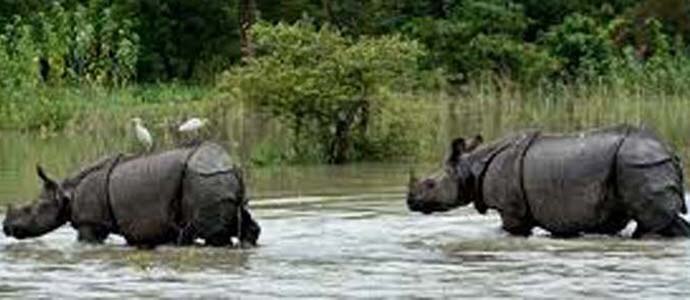 The tiger which ventured out of Kaziranga National Park ventured out because of the park was flooded. (Photo: Aaj Tak)
Another case which has surfaced is the one in Hingni village near Bor National park (MH) where a tiger has taken shelter in a defunct Noble Expochem limited (NEL) industry’s premises. The industry is hardly 5 kms away from Bor National park’s boundary and it is possible the sub-adult tiger must have ventured out in search of a new territory. NEL is an explosive factory which is in tiger reserve’s eco sensitive zone (ESZ). This exposes the government’s approach to sanction these factories in eco sensitive zones also.
These incidents expose the current government policies and the rate at which we are encroaching the natural habitats and territories meant for wild animals to live, because of which they have to come out of their habitats.


Comments
Post a Comment