Bullet train project to damage only 32,044 mangroves instead of 53,000. Biting the Bullet?
Will the Mumbai-Ahmedabad 508-km bullet train line at the cost Rs. 1.1 lakh crore will save Mumbai from the deluge by cutting through 40% of the mangroves?
In a glimmer of hope, the National High-Speed Rail Corporation Limited (NHRSCL), which is the implementing agency of the Railways’ bullet train project has said that they have reworked the design of the station in Thane, Maharashtra, to reduce the number of mangroves affected due to the project.
This comes after a slew of protests by environmental activists who have been saying that the size of the mangroves lost would be equivalent to five-and-a-half times the size of Mumbai’s Azad Maidans. They had also asked the government to look for alternative options rather than killing the mangroves in their plea addressed to PMO and Maharashtra Chief Minister Devendra Fadnavis on June 25, 2019.
Responding to the plea, NHSRCL has issued a statement that they have reworked the design of the station in Thane to reduce the number of affected mangroves from the estimated 53,000 to 32,044.
In his statement, Achal Khare, MD, NHRSCL said that all the required wildlife, forest and CRZ clearance has been taken and the forest clearance came with a few conditions. The Environment Ministry had put a condition that the Thane station design is to be reviewed so that the affected mangrove region can be reduced, the statement further read.
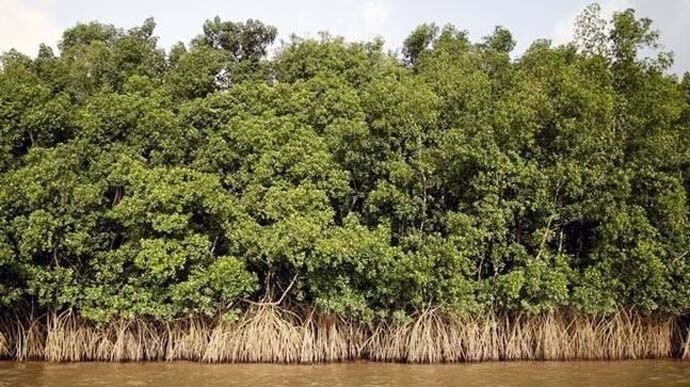 Goodbye mangroves. You will not be missed by Mumbaikars who will now have a bullet train. (Photo: India Today)
“That without changing the location of Thane station, in what all ways can we reduce the Mangrove region — this is what we discussed that design with Japanese engineers and modified it accordingly,” Khare reportedly said.
“Passenger areas like the parking area and passenger handling area have now been moved out of the mangrove region. The location of the station is the same but after redesigning it, earlier 12 hectares mangrove regions was getting affected in Thane, but now only three hectares will get affected. So this way, we have reduced around 21,000 mangroves and now only 32,044 mangroves will get affected by the entire project. Earlier there were around 53,000 mangroves getting affected,” he added.
NHSRCL has claimed that it will get the mangroves affected by the bullet train project compensated at the rate of 1:5, by depositing money into mangroves cell, which will do the compensatory afforestation. “So the number of mangroves which are getting cut is 32,044. Then around 1,60,000 new mangroves will be planted and the entire financial expense will be borne by NHSRCL. New mangroves will be planted through mangrove cells,” the statement went on to say.
While the step does seem positive and encouraging, it is to be noted that nearly 40% of the mangroves will still be destroyed for the bullet train. Mangroves are intermediate vegetation between land and sea that grow in oxygen-deficient waterlogged soils. They perform important ecological functions like nutrient cycling, hydrological regime and fish-fauna production. Most importantly, mangroves act as shock absorbers against flooding and offer coastal protection.
At a time when Mumbai is facing incessant flooding year after year, it is important to assess the importance of mangroves at least now.
Mangroves protect Mumbai from storms, winds, waves & floods. Yet, 54,000 will be razed for the bullet train.Will the train shift Mumbaikars to Ahmedabad when our city drowns?I urge @CMOMaharashtra to urgently intervene. Planting trees across Maharashtra won't save Mumbai https://t.co/M9mMGB5UiE
— Milind Deora (@milinddeora) July 2, 2019
These salt-tolerant trees have an extensive root system and act like sponges in absorbing excess water. Imagine thousands of fingers holding the soil firmly in place — that’s exactly how mangrove roots protect the soil — and by extension the city of Mumbai.
While it is great that NHRSCL is offering compensatory money for the affected mangroves, it is not that easy to compensate. For starters, mangroves cannot be moved from one place to another —it is at a particular location for a reason. So even if new mangroves are planted, the next important question is where? Has the new area been assessed for the viability of the mangroves thriving? For, it takes 10-15 years for a mangrove tree to reach maturity — and the first 5 years are crucial to make sure it stays strong and healthy.
Have any efforts been made to protect the wetlands? Because mangrove trees are indispensable to the wetlands and wetlands are required to protect our shores from wave action, reduce the impacts of floods, absorb pollutants and improve water quality.
While NHSRCL’s step — albeit a tiny one —is in the right direction, the bullet train seems to be driving a bullet right through the ecology of India’s finance capital. When 1.84 crore Mumbaikars are affected every year by Mumbai's waterlogging, will the bullet train act as a barrier as the mangroves have done for centuries?
Also read: PM's ambitious bullet train is set to shoot straight through the flamingos' hearts


Comments
Post a Comment